There are leaders who follow the curve—and then there are those who bend it.
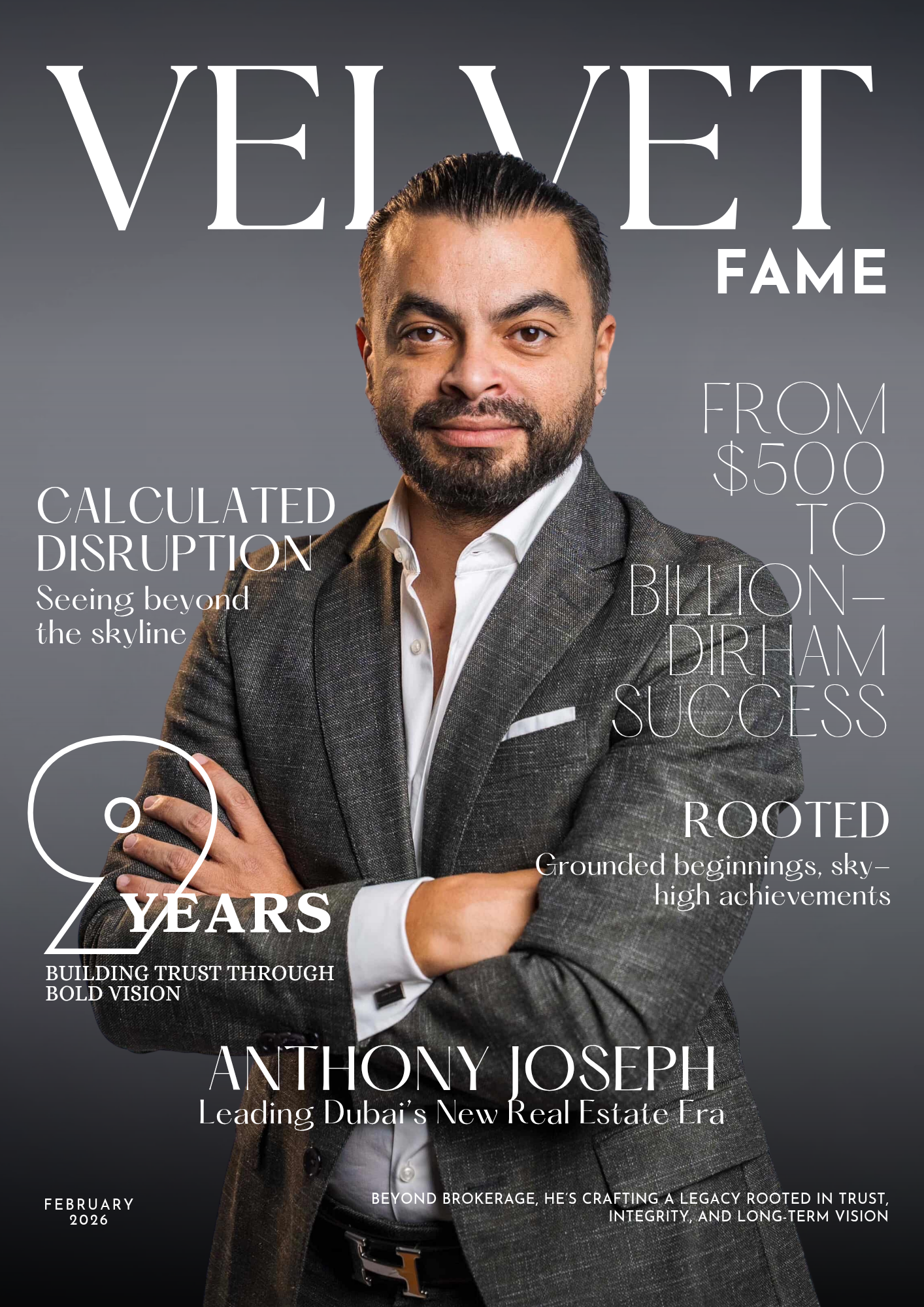
In the high-stakes arena of Dubai’s real estate market, where ambition rises as fast as the skyline, Anthony Joseph Abou-Jaoude has done more than close deals. He has reshaped the narrative of what modern brokerage can be. From arriving in the UAE in 2014 with just $500 to closing over 9.3 billion AED in sales, his story is not merely one of financial ascent—it is one of strategic disruption, psychological insight, and movement-building.
Today, AJ stands at the helm of Disruptive Real Estate, a vertically integrated ecosystem that blends brokerage, consulting, property management, media, and education. But numbers alone fail to capture his impact. What distinguishes him is not scale—it is structure.
The $500 Beginning
When Anthony Joseph landed in Dubai, the city was already a symbol of global ambition. Yet he identified a gap—not in infrastructure, but in philosophy.
While many brokers competed in the luxury resale market, AJ focused on off-plan properties—developments sold before completion. To him, off-plan was not speculation; it was strategy. It offered time leverage, flexible payment plans, and entry points accessible to first-time investors.
With a background in advertising and a minor in psychology, he applied behavioral insights to sales conversations. Rather than selling square footage, he sold clarity. He broke down financing structures. He explained risk cycles. He treated every deal as an education session.
That foundation would become the cornerstone of a multi-billion-dirham portfolio.
Beyond the Vanity Metric
The 9.3 billion AED figure is staggering. Yet AJ challenges the obsession with gross volume.
“Closed sales is a vanity number if it’s just about commission,” he often says. What matters is client retention.
His approach operates like a flywheel:
- Identify high-potential off-plan opportunities.
- Structure intelligent financing solutions.
- Ensure ongoing income through hospitality or property management.
Instead of transactional brokerage, he built continuity. Clients were not handed keys—they were given systems. During the market corrections of 2020 and 2022, this approach proved resilient. While panic spread, many of his investors maintained income stability due to structured planning.
In a city known for rapid cycles, trust became his most valuable asset.
Knowledge as Leverage
In an industry where trade secrets are guarded, AJ did something unconventional—he published them.
His books, Take Charge and Take Action, became Amazon bestsellers by detailing negotiation frameworks, commission models, and client psychology. Competitors questioned the move. Why reveal the blueprint?
Because, in his philosophy, scarcity thinking limits growth. Educated agents elevate the entire market. Transparency builds credibility.
This belief gave birth to Take Charge Real Estate Academy, a training institution designed to professionalize the brokerage field. Unlike motivational seminars built on lifestyle optics, the academy emphasizes contract law, economic fundamentals, emotional intelligence, and crisis negotiation.
Graduates don’t just sell—they advise. Many have launched boutique firms of their own, extending AJ’s philosophy across the ecosystem.
The Integrated Ecosystem
The name “Disruptive” is not branding flair—it is operational intent.
Disruptive Real Estate functions as a unified platform. Legal processing, mortgage advisory, property management, and hospitality services operate under coordinated leadership. Clients interact with one ecosystem instead of navigating fragmented vendors.
In practical terms, this reduces friction. In strategic terms, it increases retention and control.
AJ refers to it as becoming the “single pane of glass” for investors—a centralized vantage point for complex decisions.
As Dubai’s property landscape matures, this integrated model positions the company less as a brokerage and more as an investment infrastructure provider.
Media as a Movement
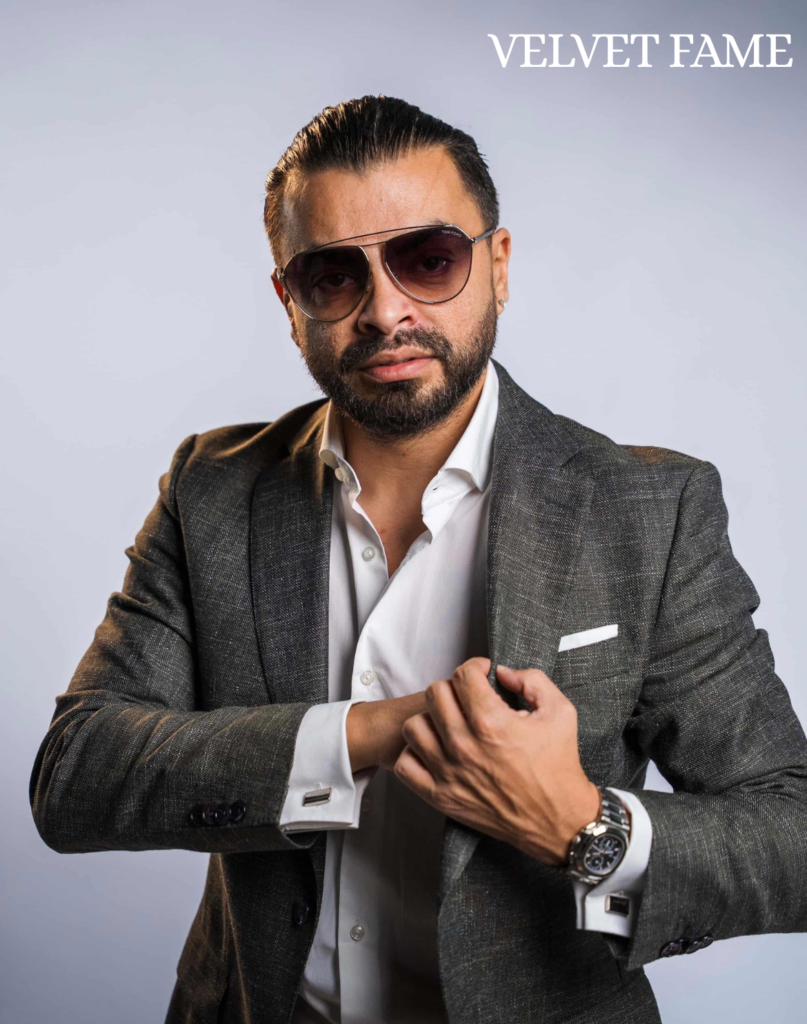
Parallel to his real estate ascent, AJ cultivated a media presence that amplified his philosophy.
Through Dubai Stars and The AJ Podcast, he has hosted over 80 long-form interviews with entrepreneurs, creatives, and industry leaders. The conversations dissect mechanics—how wealth is built, how resilience forms, how failures transform.
For AJ, media is not marketing. It is research.
Every interview informs strategy. Every dialogue strengthens network depth. In a region often portrayed through glamour, his podcasts spotlight process and perseverance.
The result is community—not just audience.
The Crisis Crucible
True leadership reveals itself in downturns.
When COVID-19 halted global travel in 2020, Dubai’s real estate engine stalled. Investors abroad were locked out of properties. Rental yields dipped. Fear surged.
AJ responded by restructuring his consulting division into what he called portfolio triage. His team renegotiated payment schedules, transitioned units into short-term rentals where viable, and maintained properties on behalf of stranded owners.
Rather than retreat, he intensified service.
Many of those clients later became advocates, fueling rapid growth during the rebound years of 2021 and 2022.
The Unicorn Vision
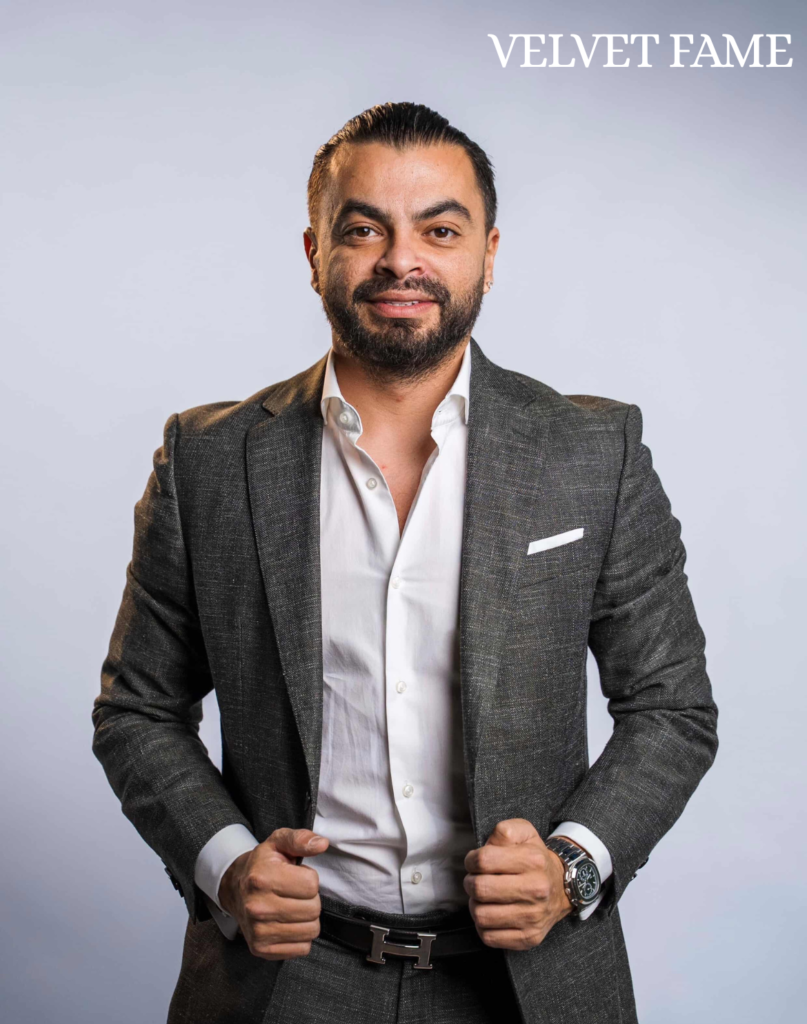
Looking toward 2026, AJ’s ambition extends beyond sales volume. He aims to build Dubai’s first real estate unicorn centered not on transaction velocity, but on service intelligence.
The roadmap includes algorithmic transparency in property management and hospitality-level service benchmarks for residential assets. Ownership, in his vision, should feel as stable as a savings account—predictable, monitored, optimized.
Critics argue Dubai’s fragmented market resists consolidation. AJ views fragmentation as opportunity. Where others see silos, he sees integration potential.
Profit with Purpose
Equally central to his brand is an emphasis on corporate responsibility. Flexible work policies, mental health awareness, and mentorship initiatives—particularly for young Lebanese entrepreneurs—reflect his belief that profit and purpose are not opposing forces.
“Success isn’t just about profit—it’s about people and pushing boundaries every day,” he says.
Long before ESG became mainstream language, he embedded operational ethics into his company culture.
The Blueprint
Anthony Joseph’s rise from $500 to 9.3 billion AED is compelling. But his deeper contribution lies in architecture—the construction of a closed-loop ecosystem where education fuels media, media builds trust, trust drives transactions, and transactions fund further education.
It is a self-sustaining orbit.
In an era defined by algorithmic disruption, geopolitical shifts, and rising expectations for ethical leadership, AJ offers a counter-narrative: disruption with discipline.
He did not merely succeed in Dubai. He redefined participation within it.
And as 2026 approaches, one thing is clear—the skyline may symbolize ambition, but the real foundation is philosophy.















+ There are no comments
Add yours